
Will AI Take Over Tech?
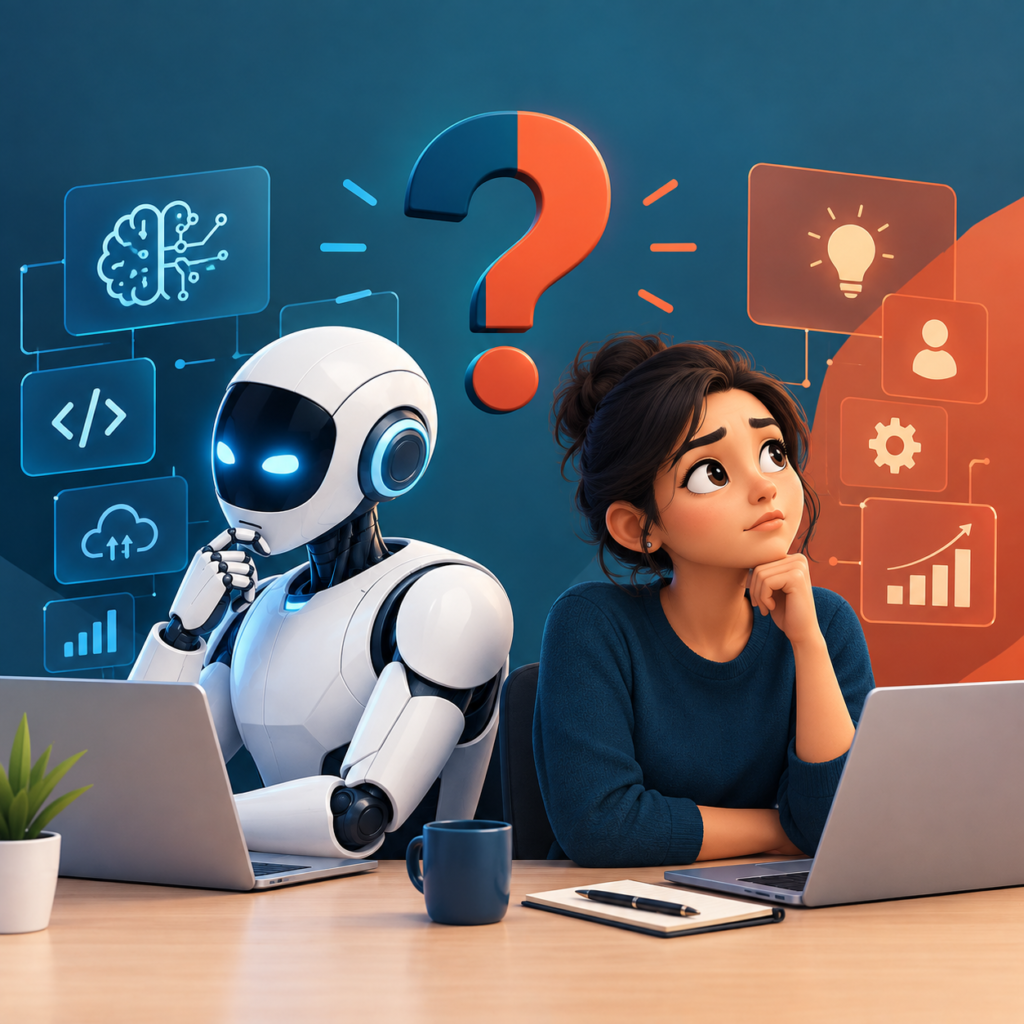
AI is changing the way technology companies work. From software development and data analysis to customer support and digital marketing, businesses are using AI to automate repetitive tasks and improve everyday workflows.
This raises an important question: Will AI take over the tech industry?
The answer is more complex than simply replacing people with machines. AI is changing tasks, roles and the skills businesses need. At the same time, it is creating new opportunities for people who know how to work with AI effectively.
1. How AI Is Changing the Tech Industry
AI automation is already being used across different areas of technology.
Software teams use AI tools to generate code, identify errors and create test cases. Marketing teams use AI for content ideas, reporting and campaign optimisation. Customer service teams use AI assistants to handle routine enquiries.
Common applications include:
- Software development
- Data analysis
- Customer support
- Digital marketing
- Cybersecurity
- Testing and quality assurance
- Business process automation
The biggest change is happening with repetitive tasks. When a task follows a clear process, businesses have more opportunities to automate it.
This allows employees to spend more time on strategy, problem-solving and creative work.
2. Will AI Replace Tech Professionals?
AI is changing technology roles, but the impact is different across jobs and tasks.
The World Economic Forum’s Future of Jobs Report 2025 projected significant workforce changes by 2030, with 170 million jobs created and 92 million displaced globally. These figures are global employer-based projections, not a prediction for a specific industry or country. The report also identified AI and big data, technological literacy and analytical thinking among important skills for the future of work.
Instead of looking only at job titles, it is useful to look at individual tasks.
AI is well suited to tasks such as:
- Data processing
- Routine reporting
- Basic coding assistance
- Document organisation
- Repetitive customer enquiries
- Content drafts
Human expertise remains important for:
- Strategy
- Creative direction
- Complex problem-solving
- Business decisions
- Relationship management
- Quality control
- Accountability
This means many technology roles are likely to evolve as AI becomes part of everyday workflows.
3. What Should Businesses Do Next?
Businesses do not need to automate everything.
Start by identifying repetitive processes that consume significant time. Then test whether AI can improve the process without compromising quality, security or customer experience.
A practical approach is:
- Identify a repetitive task.
- Map the current workflow.
- Find suitable AI automation opportunities.
- Test the process on a small scale.
- Keep human review where required.
- Measure time saved, accuracy and business results.
- Expand the workflow if it delivers measurable value.
Businesses also need to prepare their teams. Employees need to understand how AI tools work, how to evaluate their output and when human judgement is required.
The Future of Tech Is Changing
AI automation is becoming an important part of modern technology.
It is taking over certain tasks, changing existing workflows and creating demand for new skills. At the same time, businesses still need people who understand customers, solve complex problems, make decisions and take responsibility for outcomes.
The future of technology is likely to involve a combination of AI capabilities and human expertise.
The question for businesses is no longer only, “Will AI take over tech?”
It is also: